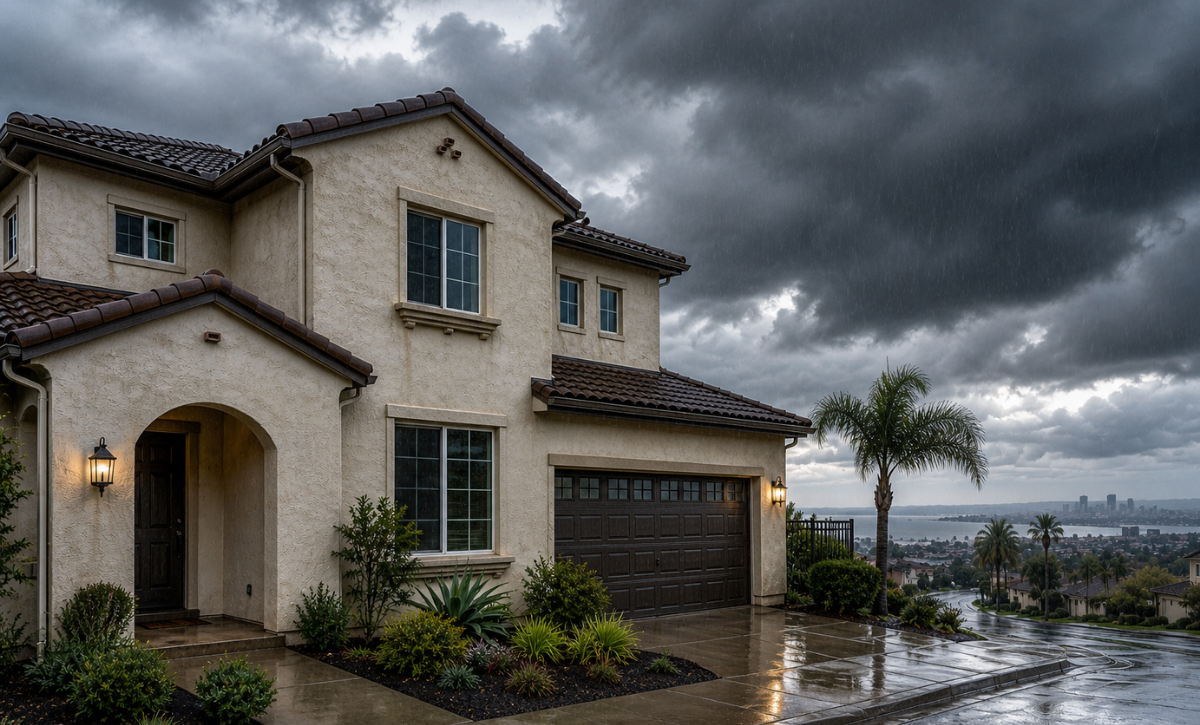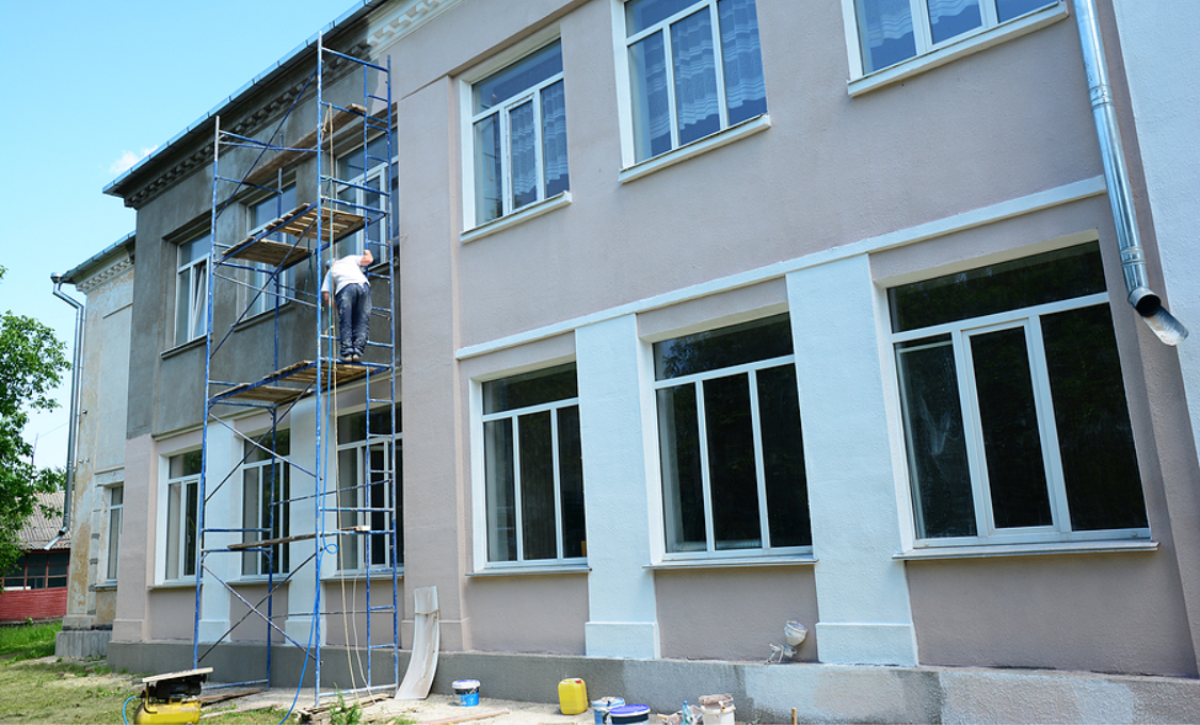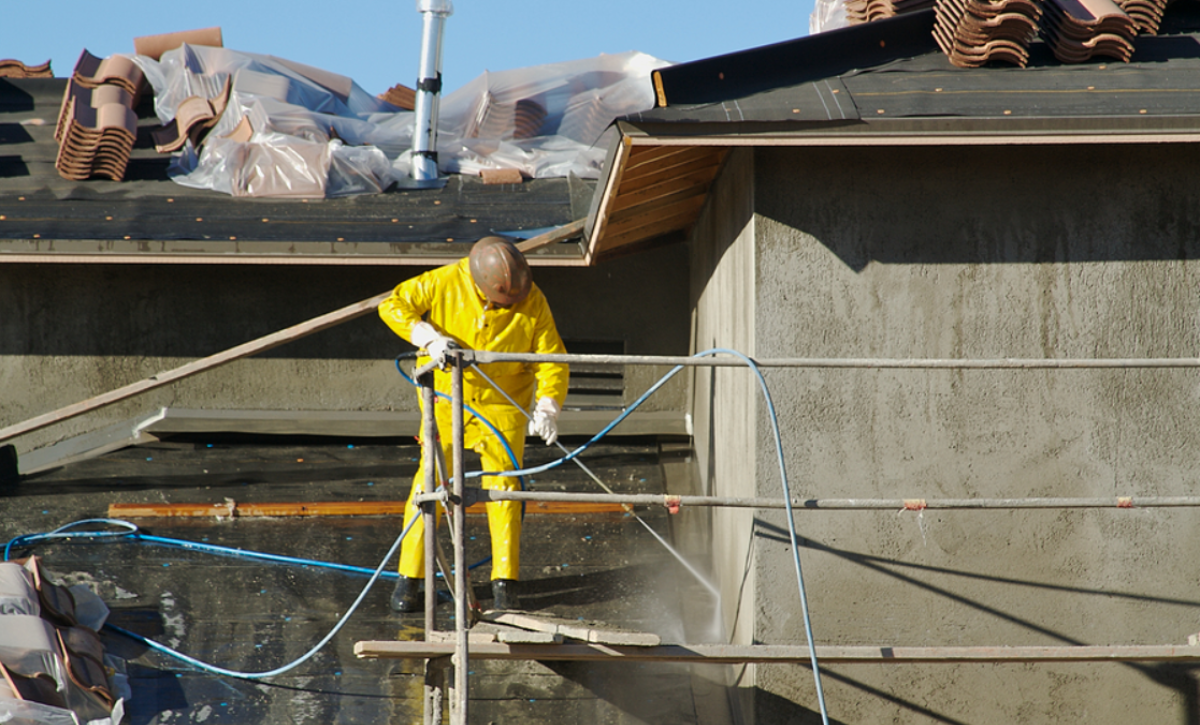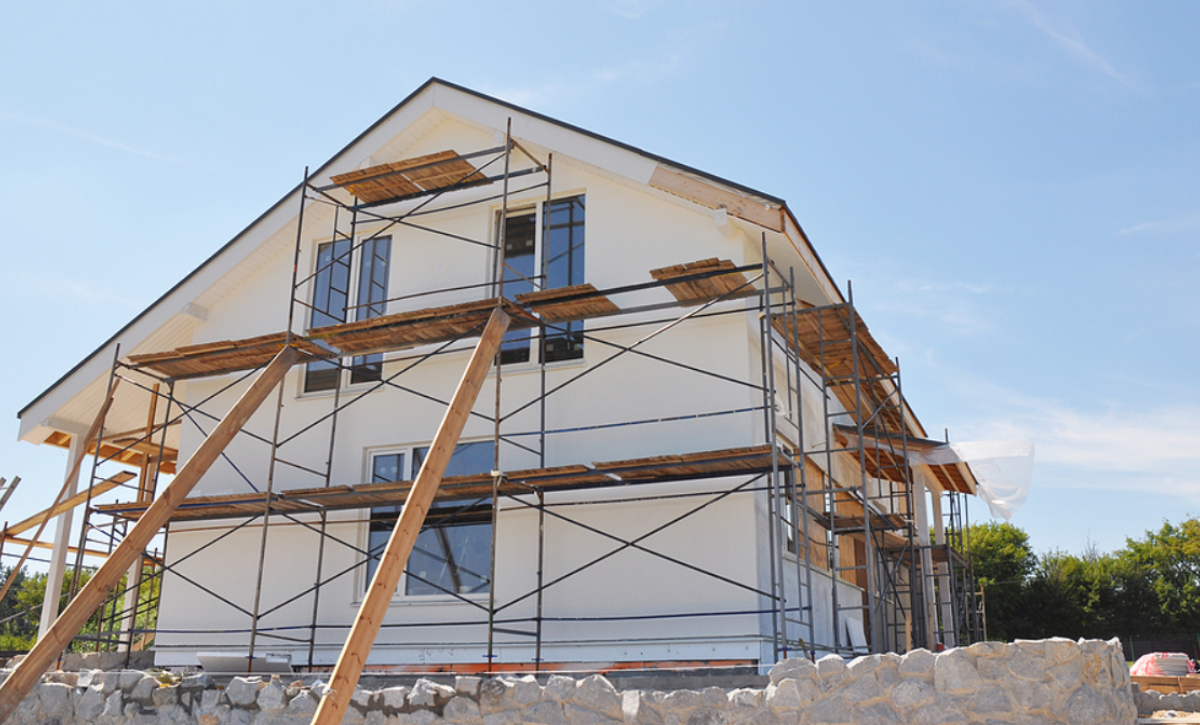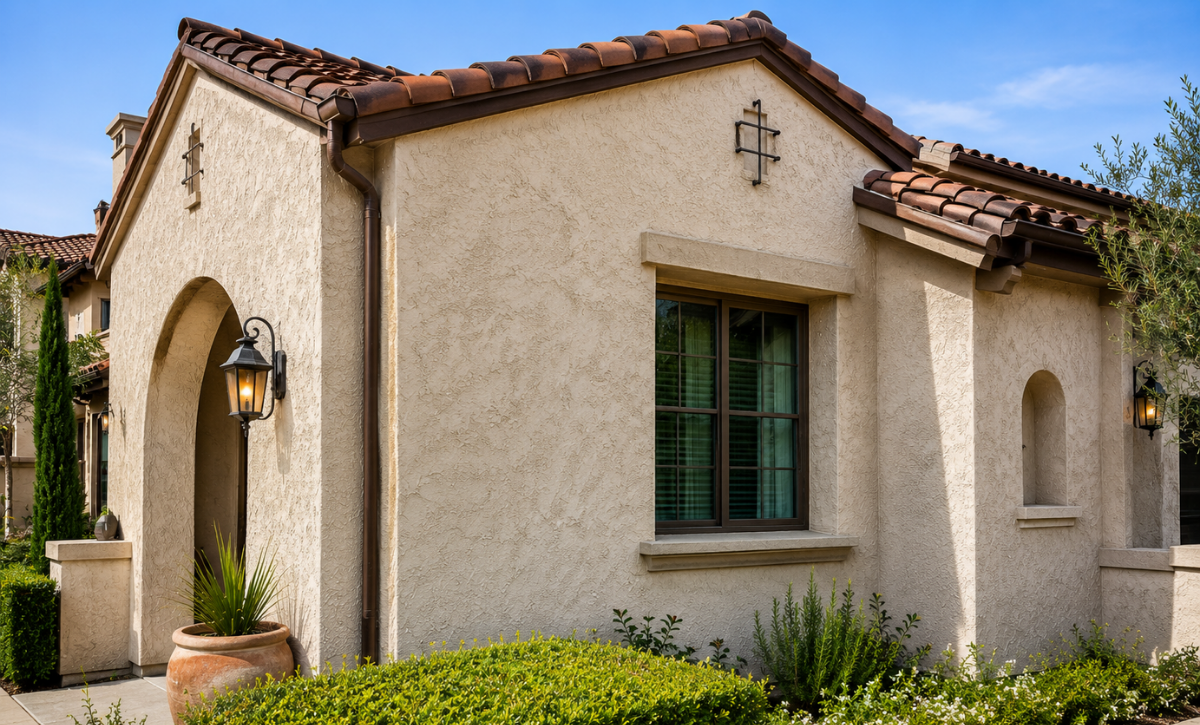
When you look at a stucco exterior, you see the finished surface, texture, and color of the wall. But stucco is more than just the outer finish. A properly constructed stucco wall is made up of several components that work together to create a durable exterior and help protect the structure from the elements.
Understanding what is behind your stucco can help explain why proper installation, moisture management, and professional repairs are important. If one part of the wall system is damaged or moisture gets where it shouldn’t, the visible problem may only be part of the story.
What Is Behind a Stucco Wall?
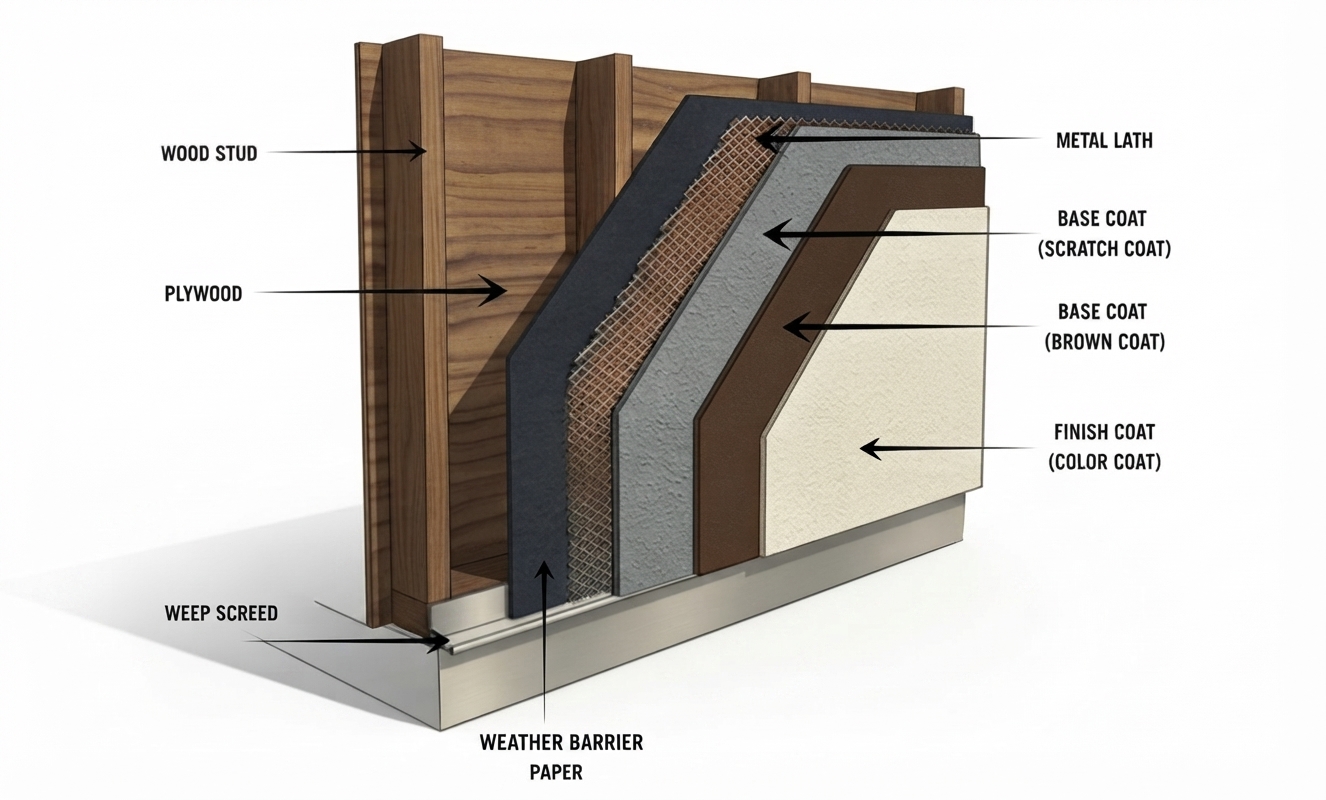
A stucco wall is a system made up of multiple components. Starting from the structure of the wall and moving outward, these components work together to support the stucco and help protect the building.
1. Wood Stud Framing
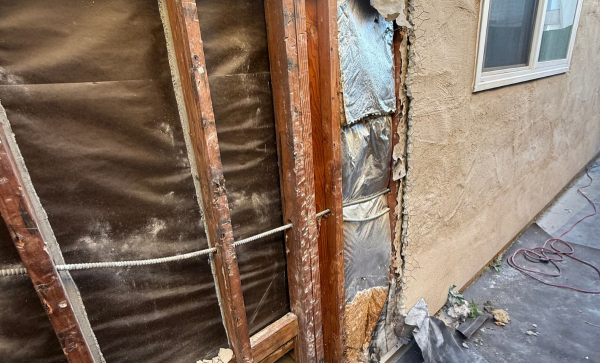
Wood stud framing forms the structural framework of the wall. The studs provide support for the wall assembly and help define the structure of the exterior wall.
2. Plywood Sheathing
Plywood sheathing is attached to the wall framing and forms part of the wall assembly behind the stucco system. It provides a solid surface for the exterior components installed over the framing.
3. Weather Barrier
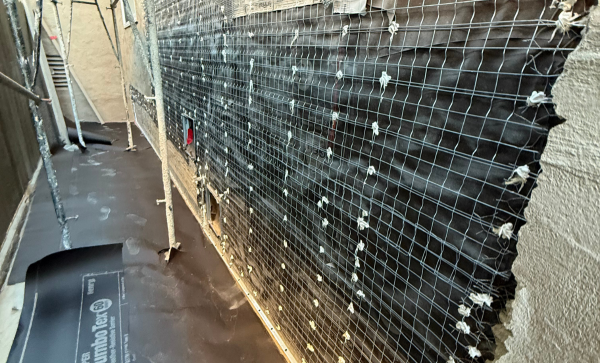
The weather barrier is an important part of the wall system that helps protect the structure from moisture that gets past the exterior surface. Proper moisture management is important because water that gets into the wall assembly can potentially lead to more serious problems if it is not properly managed.
4. Metal Lath
Metal lath provides reinforcement for the stucco system and creates a base for the stucco coats to be applied. Proper installation of the lath is an important part of creating a durable stucco exterior.
5. Scratch Coat
The scratch coat is the first stucco coat applied over the prepared wall assembly. Its textured surface helps provide a mechanical bond for the coat that follows.
6. Brown Coat
The brown coat builds up the body of the stucco system and helps create a consistent surface for the final finish. Proper application and preparation of this layer are important to the appearance and performance of the finished wall.
7. Finish Coat
The finish coat is the visible surface of the stucco wall. It provides the final texture and appearance and can be customized to complement the architectural style of a home or building.
Where Does the Weep Screed Fit In?
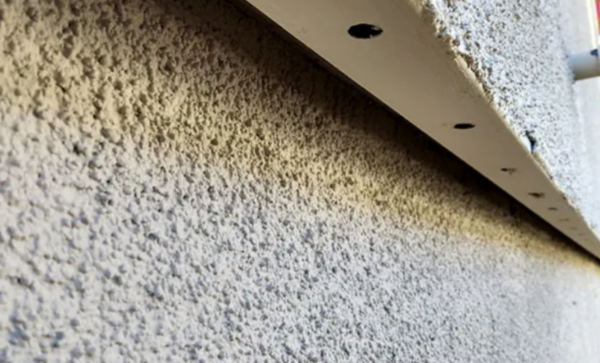
The weep screed is an important part of the stucco wall system, but it should not be thought of as the final layer. It is installed at the base of the wall as part of the wall assembly, with the weather barrier and metal lath integrated with it before the stucco coats are applied above.
Its purpose is to provide a path for moisture within the wall assembly to drain to the exterior. Proper placement of the weep screed helps manage moisture and protects the components behind the stucco.
Why These Layers Matter
When these components are properly installed, they work together as a complete wall system. The finished stucco provides the exterior appearance while the components underneath help support the system and manage moisture.
This is also why a crack, stain, or other visible problem should not always be treated as an issue with only the surface. In some cases, damage can extend beneath the visible stucco or indicate that moisture has entered the wall assembly.
What Happens When Moisture Gets Behind Stucco?
Moisture intrusion can be difficult to identify from the outside because the visible signs may not appear immediately. Cracking, staining, discoloration, bulging, or deterioration can sometimes indicate that a larger problem exists beneath the surface.
Addressing potential water intrusion early can help prevent a small problem from becoming a more extensive repair. If you notice changes in your stucco exterior, having the area professionally evaluated can help determine what is actually happening behind the surface.
When Should You Have Your Stucco Inspected?
If you notice cracks, staining, discoloration, bulging, or other signs of deterioration, it may be worth having your stucco inspected. A professional evaluation can help determine whether the issue is limited to the surface or whether additional repairs may be needed.
If you’re unsure what your stucco needs, Sunny Coast Stucco can evaluate your exterior and help determine the appropriate next step.
Contact Sunny Coast Stucco
Sunny Coast Stucco provides Residential Stucco and Commercial Stucco, as well as Stucco Repair, Stucco Renovation, Exterior Plastering, New Construction, and other stucco services throughout San Diego County.
If you have questions about your stucco exterior or would like to have a problem evaluated, please contact Sunny Coast Stucco at (619) 230-5203.
Licensed California Stucco Contractor (#1045778) with over 20 years of hands-on experience in stucco installation, repair, waterproofing, and exterior restoration throughout San Diego County.